
Adult Learning Theory Explained for Workplace Learning
Effective training starts with understanding how adults learn
| September 16, 2026 | Instructional Design, Learning Science |

In this article:
Have you ever sat through a training that you couldn’t wait to escape? You probably tuned out and counted down the minutes until you could get back to your “real work”. Unfortunately, this experience isn’t uncommon. The good news is that when learning and development teams understand some basics about adult learning theory, they can avoid the mistakes that make workplace learning a dreaded task. By focusing on meaning and relevance, organizations can build training programs that help employees feel empowered instead of disengaged.
Key Takeaways
- Most workplace training still mirrors how children learn in school; a model that reliably undermines engagement and retention for adult learners.
- Six core principles of adult learning theory offer practical, evidence‑based guidance for designing training experiences that resonate with adults and support real performance.
- L&D teams can make small, intentional shifts to honor how adults learn and quickly strengthen the impact of their training programs.
What is Adult Learning Theory?
Adult learning theory, originally developed by Malcolm Knowles, describes how adults learn differently from children. Instead of relying on memorization or passive listening, adults learn best when training is relevant, practical, and connected to their real‑world responsibilities.
Knowles’ framework, also called andragogy, emphasizes that adults bring experience, internal motivation, and a desire for autonomy into every learning situation. They want to understand why something matters, how it connects to their goals, and how they can use it immediately.
Yet many workplace learning programs still resemble the school model: an expert talks, employees listen, a quiz follows, and everyone returns to work. It’s familiar, but it rarely leads to meaningful behavior change or improved performance.
Adult learning theory shapes the instructional design process from the ground up, giving organizations a more effective way to design training that respects how adults naturally learn and supports the real challenges employees face every day.
Why Employers Need to Understand Adult Learning Theory
The best workplace learning programs aren’t just about delivering information. They’re focused on improving performance. When training doesn’t align with how adults learn, organizations see predictable problems like low engagement, poor knowledge retention, minimal on‑the‑job application, and employees who feel training is a “check‑the‑box” requirement. Conversely, when training is built around adult learning principles, employees participate more fully and mastery is accelerated.
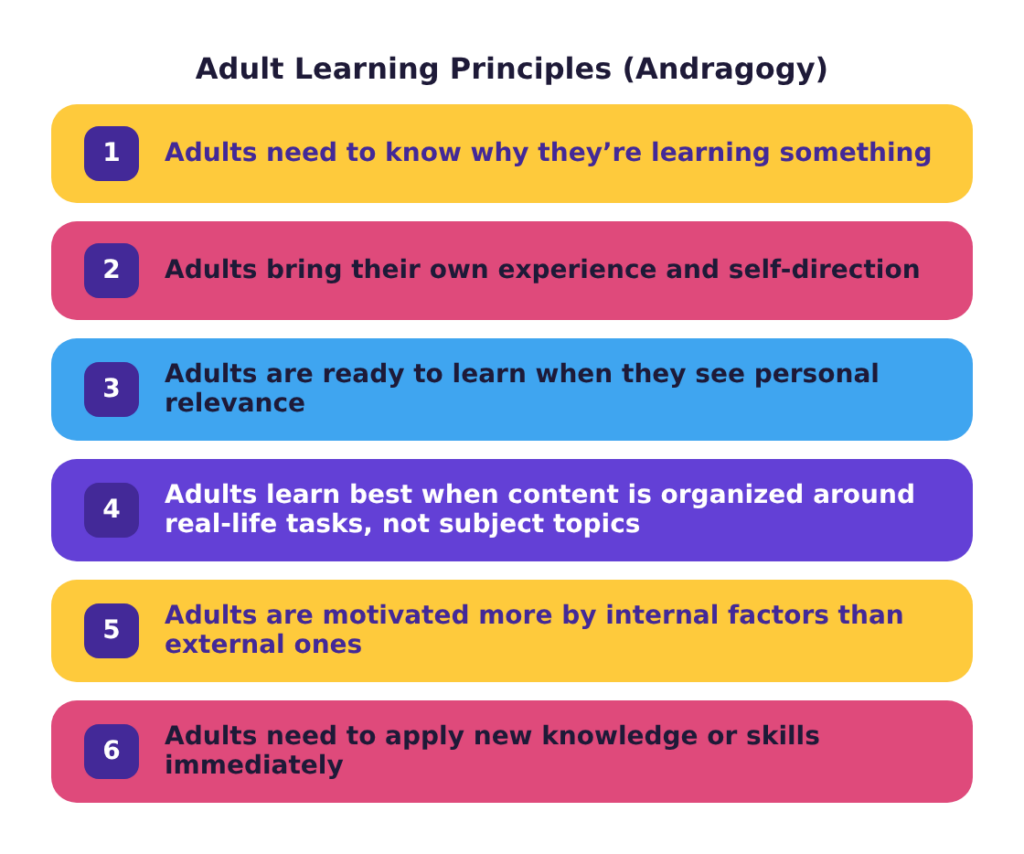
Six Core Principles of Adult Learning Theory
Adults Need to Know Why Content Matters
Adults are most motivated when they see the purpose of the content. When the “why” is clear, they are more likely to engage.
For example, a compliance course is far more meaningful if it opens with a real story about a data breach or safety incident. Starting with context helps learners immediately grasp the real‑world implications of the skills they’re about to build.
Adults Want Autonomy and Flexibility
Adults are self‑directed. They appreciate having some control over how they learn.
Small choices such as format, timing, or learning path show respect for an employee’s time and preferences. A frontline worker might want a quick video before a shift. A manager might prefer a deeper workshop. A remote employee might value a digital resource they can revisit later.
Adults Bring Experience and They Want to Use It
Adults bring years of experience, insights, and context to training. Learning opportunities are more powerful when they tap into what learners already know.
Organizations can acknowledge the wisdom employees already have by incorporating opportunities for staff to share their stories, engage in reflection, and learn through peer-to-peer interactions.
Adults Learn When They’re Ready
Unlike children who learn material because a teacher tells them to, adults are ready to learn when their goals or challenges call for it.
A new hire needs foundational skills while a seasoned employee may be ready for leadership development. When designing learning ecosystems, organizations need to consider how to meet the needs of all employees.
Adults Are Problem‑Centered Learners
Adults want learning that helps them solve real problems they’re facing today.
A customer support rep doesn’t benefit from a long lecture on communication theory. What helps is a simple model for de‑escalating a tough call and a scenario-based learning opportunity that lets them practice using the new technique. When learning is tied to real challenges, it feels more valuable.
Adults Are Motivated by Internal Drivers
Adults learn because they want to grow or advance, and training feels more meaningful when it supports that progression. Self-Determination Theory holds that people are motivated most strongly by intrinsic drivers like autonomy, competence, and connection, not just external rewards, which is why training tied to genuine growth tends to land better than training tied only to a requirement.
Organizations can tap into this motivation by offering internal credentials, clearly labeled skill badges, or role-based learning tracks that help see which training will give them the skills they need to advance.
Final Thoughts
Adult learning theory gives organizations a clear, research‑backed roadmap for designing workplace learning that works. When training is relevant, practical, and connected to employees’ real responsibilities, it becomes something people want to participate in, not something they endure.
Ready to build training that respects how your employees learn? Explore our instructional design consulting services or schedule a free consultation with one of our designers to talk through your next program.